On-chip Sort

On-chip Sort

On-chip Sort is the world’s first microfluidic chip-based cell sorter. Integrating the processes of sample detection, separation, and collection within a microfluidic chip has realised a small footprint and easy-to-use cell sorter. This system contributes to the analysis and sorting of a wide range of samples including fragile cells, cell clusters, microorganisms and emulsion droplets.

Our microfluidic technology allows for sorting of variety of sample types including those that were impossible to sort using conventional cell sorters. On-chip Sort will expand the range of sample analysis and contribute to many areas of science research and to a variety of industries.

Description

FEATURES

Microfluidic chip technology

On-chip Sort integrates the entire process from sample analysis to separation on a small microfluidic chip with measurements of 5.5 cm × 4.0 cm.

In contrast to Jet-in-air and cuvette-hybrid sorting methods used on conventional cell sorters, the Flow Shift method of On-chip Sort does not cause damage to cells due to the use of less than flow speed of 1 m/s and pressure of 0.3 psi. The Flow Shift method sorts a target cell by generating a short liquid pulse by pressurization of air to deflect the target cell into the collection reservoir (patent Nos. US10101261, US10222317, US10724938, and US10648899).
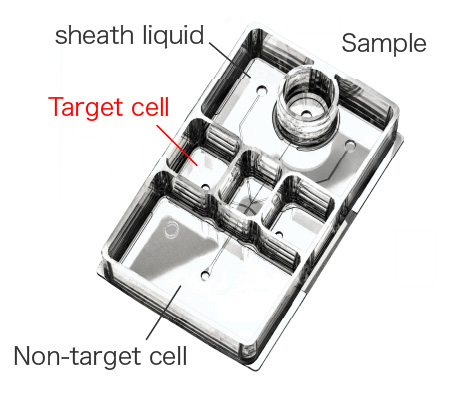
 

Easy Operation / Maintenance Free

On-chip Sort’s workflow requires no waiting time and is simple operation and user-friendly. Maintenance and cleaning are not required as all the solutions on the microfluidic chip are driven by air and hence no liquid will be in contact with any parts of the instrument.

 

Compact size / Contamination-free

On-chip Sort is compact enough to be installed in a biosafety cabinet. Sample analysis and sorting are contamination-free due to the use of disposable microfluidic chips.
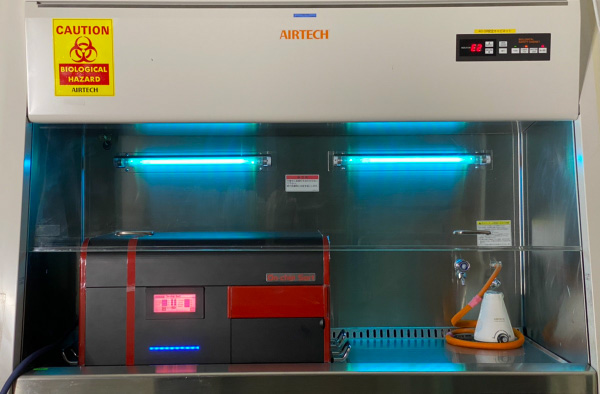


Various Samples/ Freedom of Sheath Fluid of your Choice

As cells are sorted using regulation of liquid flow inside the microchannels, hence a wide range of liquids can be used as sample and sheath fluids, including culture medium and oil.

Sample examples:

  • Mammalian cells
  • Plant cells
  • Protists
  • Bacteria / Fungi
  • Droplets

Sheath fluid examples:

  • Culture medium
  • Isotonic solution
  • Seawater and freshwater
  • Oil
  • Highly viscous culture medium

Optical Technology

The sample flowing through the microfluidic channel is irradiated with up to three lasers from the top of the microfluidic chip. Fluorescence is detected with high sensitivity in a wide range by six separate detectors (FL). Forward-scattered light (FSC), an indicator of the size of the sample particles, and side-scattered light (SSC), an indicator of the complexity of the internal structure, are acquired.
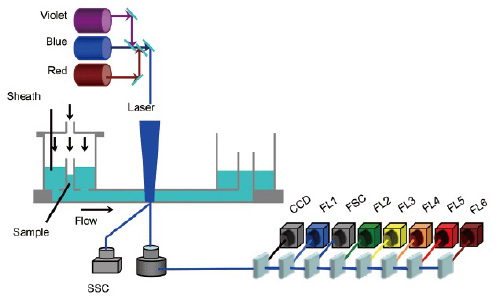
Detection

・FL1:455/20 nm
・FL2:543/22 nm
・FL3:607/36 nm
・FL4:676/37 nm
・FL5:716/40 nm
・FL6:775/46 nm
・FSC:Forward-scattered light
・SSC:Side-scattered light
Specification

Optical system and detection sensitivity

LaserUp to 3 lasers from 488 nm, 405 nm, 561 nm and 638 nm; customization available
Laser classClass 1 laser(IEC 60825-1:2014)
Measurement parametersForward scatter light (FSC), side-scatter light (SSC), 6 PMT
Size detection sensitivityFSC < 0.5μm, SSC < 1.0 μm
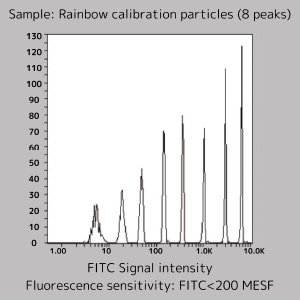
Fluorescence sensitivity< 200 MESF FITC
Data analysis capability4 decades, 18 bit
Pulse analysisHeight, Area, Width
Detection wavelengthFL1 (445/20 nm), FL2 (543/22 nm), FL3 (607/36 nm), FL4 (676/37 nm), FL5 (716/40 nm), FL6 (775/46 nm)

Fluid channel system

Flow cellDisposable microfluidic chip
Chip materialCOP
Channel size80 μm × 80 μm, 150 μm × 150 μm
Flow rate500 mm/sec~
Sheath bufferAny liquid can be used as long as COP is not dissolved
Sample fluid volume10 ~ 1000 μL
Sheath fluid volume1 ~ 9 mL
Analysis and sorting
Sorting method“Flow shift” method in the microfluidic system
Purity> 95% (depends on concentration)
Yield> 80% (depends on condition)
Cell damageNo
Cross-contamination freeYes, because of the disposable chip
Aseptic sortingYes
Pressure0.3 – 3psi
Maximum detection speed4,000 events/sec
Maximum sorting speed1,000 targets/sec
Start-up5 min
Shutdown10 sec (no cleaning necessary)

Safety

Generation of aerosolNo

Size and weight

Size (W×H×D)620 × 330 × 390 mm
Weight45 kg

Operating PC

PCLaptop PC
OSWindows 10, 64 bit
Data formatOwn format and FCS3.0

Power supply

Power requirementAC100-240V, 50/60Hz
Power consumption< 240 VA

Applications

On-chip Sort is the world’s first flow cytometer employing a microfluidic chip. It offers several advantages, such as damage-free, sheath fluid-free, and the ability to sort large cell. In addition, the disposable microfluidic chip allows the user to provide easy-to-use and cross-contamination free operation. This enables handling of a wide range of samples, including previously difficult-to-handle samples such as nerve cells, sperm, and cell clusters.


Damage-Free Sorting

Effect on phenotype

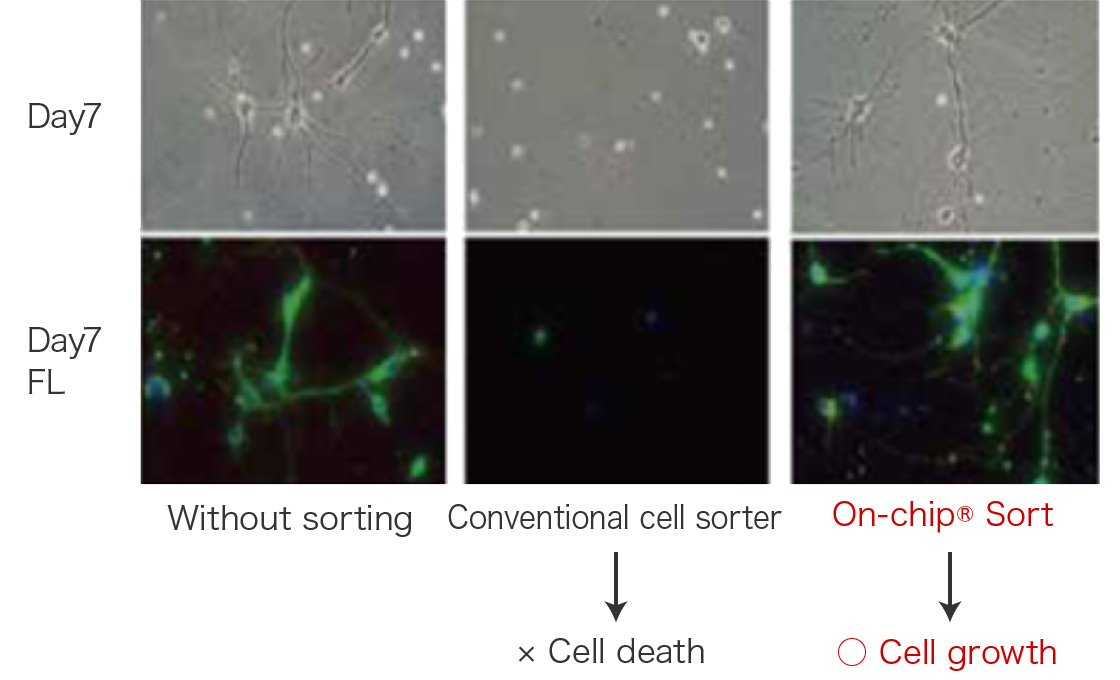
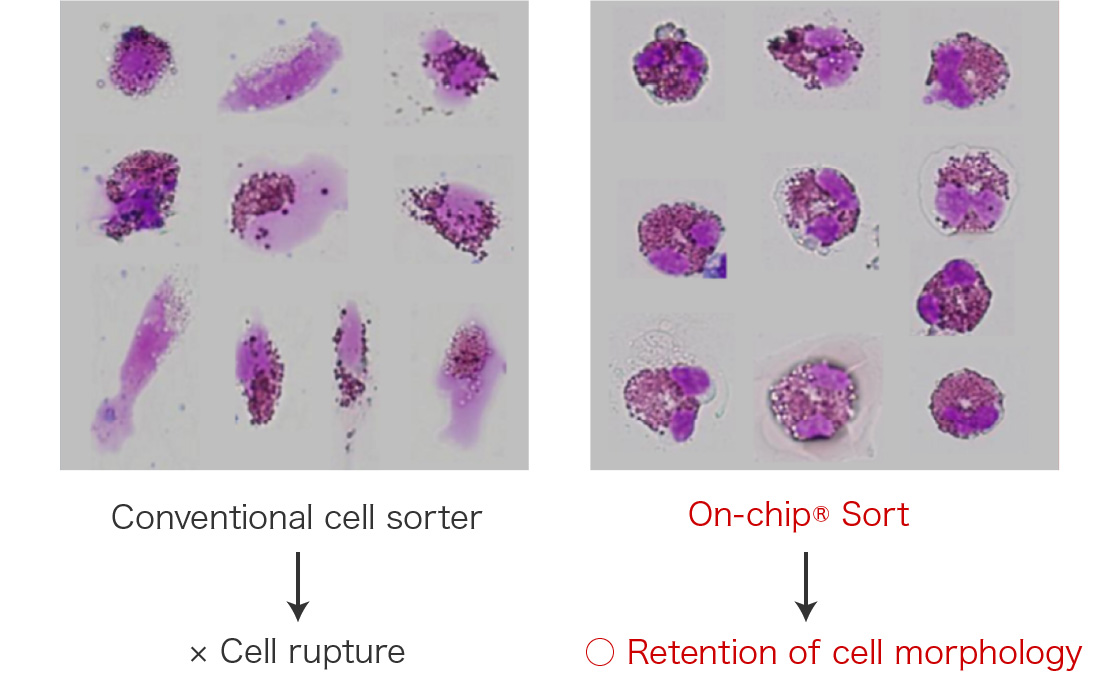
Conventional cell sorters generally employ the electrostatic sorting such as Jet-in-Air methods. These cell sorting methods have been recognized to cause morphological changes, growth retardation, decreased viability, and changes in gene expression after sorting due to “Sorter-Induced Cellular Stress” (SICS, Lopez, P. (2018) CYTO2018) that cells undergo during the sorting process, gene expression changes, etc. after sorting. The microfluidic Cellular Stress sorter has a unique sorting mechanism that eliminates the cell-damaging steps associated with conventional methods and significantly reduces SICS.

[ cell growth ]

Sorting and culturing stress-sensitive hippocampal neurons

[ cell morphology ]

Observation of eosinophils in peripheral blood after sorting

Collaboration with Dr. Ikuro Suzuki, Tohoku Institute of Technology


Effects of Sorting on Gene Eexpression

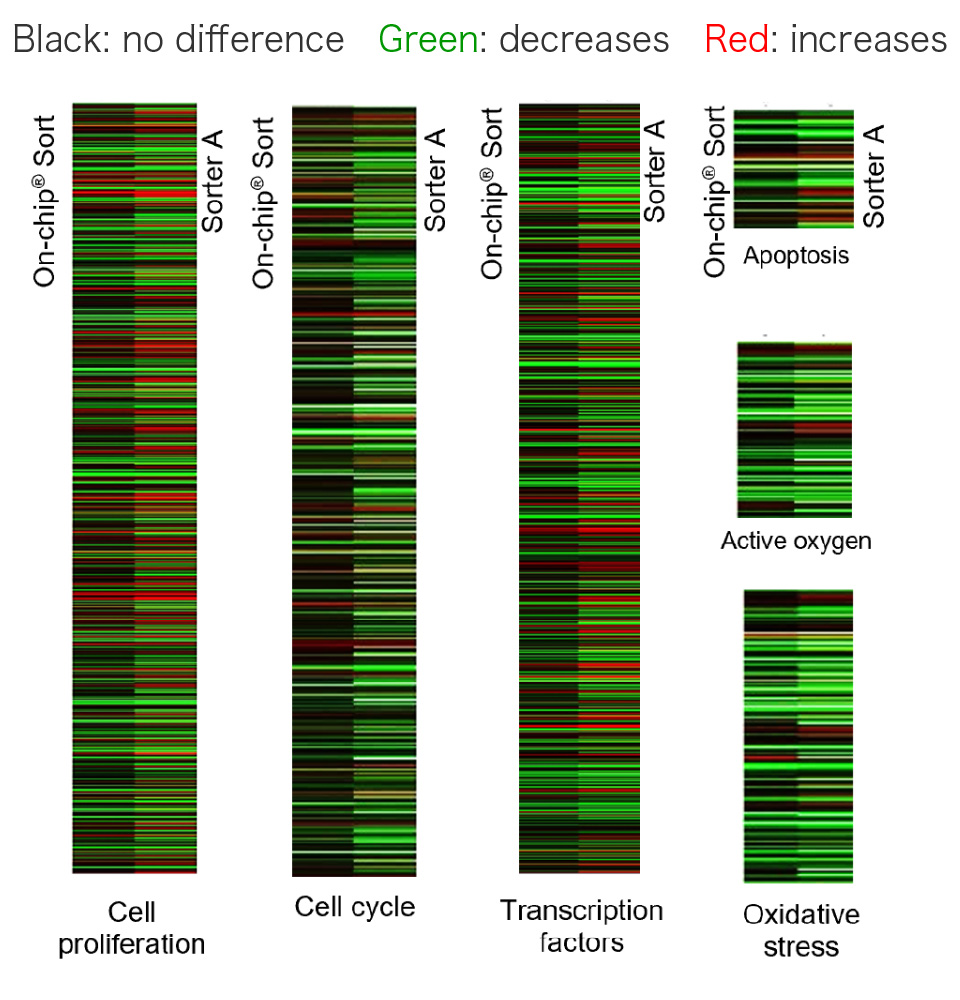
The changes in gene expression levels were investigated after sorting using On-chip Sort and a conventional cell sorter. For genes related to cell proliferation and apoptosis, which affect cell growth, it was found that the amount of genetic change was smaller when sorting was performed using On-chip Sort.

In addition, for all the data analysed, the number of genes whose expression patterns changed significantly was only about one-fifth of that sorted using a conventional cell sorter.

These results suggest that the genetic change induced by sorting on On-chip Sort is less than that on conventional sorters.

The results are obtained in conjunction with Dr. Yasuda and Dr. Hagiwara from Cell Innovator Co., Ltd., and Dr. Tashiro from Kyushu University, Japan.


Cell-Cell Complexes

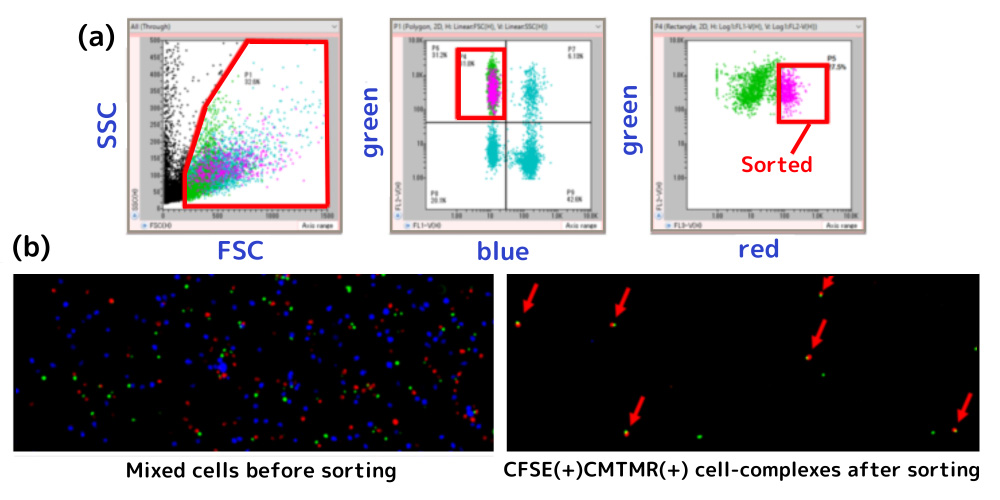
On-chip Sort is able to isolate cells that are held together by weak bonds, even those that can easily be dissociated by pipetting. Figure shows the isolation of cell doublets (green and red cells) held together by weak intercellular interactions from a heterogeneous cell mixture.

(a) Sorting of green and red cell doublets held together by weak intercellular interactions from a heterogeneous sample. (b) Sample before (left) and after (right) sorting by On-chip Sort.


Sorting of Cell Clusters and Large Particle

Spheroid Sorting

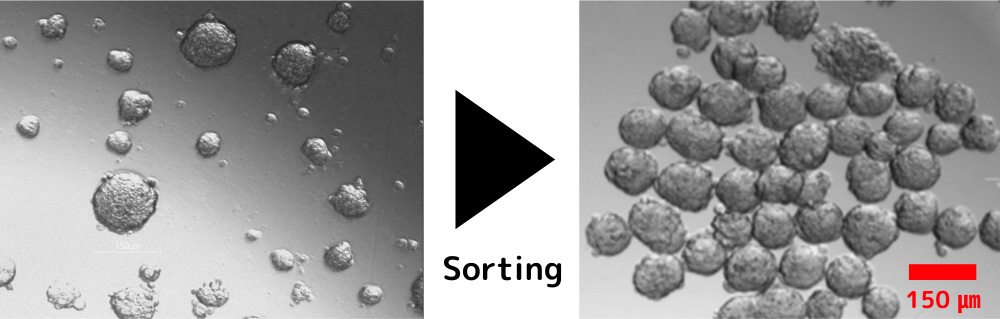
Drug susceptibility using spheroids (3D clusters of cells) is effective for efficacy evaluation of cancer treatments. On-chip Sort can sort spheroids of a particular size from a spheroid culture or clinical materials for the purpose of preparing a monodisperse spheroid sample.

Collaboration with SCIVAX Life Sciences Co.,Ltd.


Freedom of Sheath Fluid of your Choice

Protists Sorting

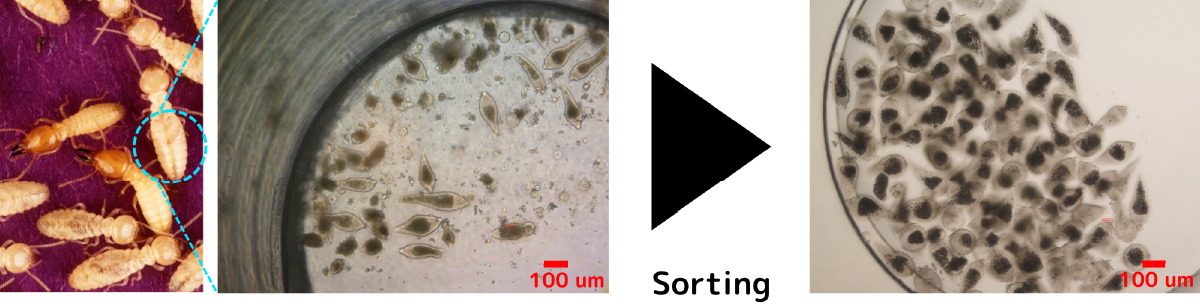
On-chip Sort allows the use of any sheath fluid of your choice, including saline, culture medium, and oil, in order to maintain the samples at their physiological condition and minimize the cell damage during sorting. Using a conventional cell sorter to sort those protists remains a challenge, because some protists are large and a specific solution has to be used as sheath fluid to prevent osmotic pressure-induced cell damages during sorting. On-chip Sort showed to successfully sort out large protozoa.

Collaboration with Dr. YUKI Masahiro,RIKEN, Japan