

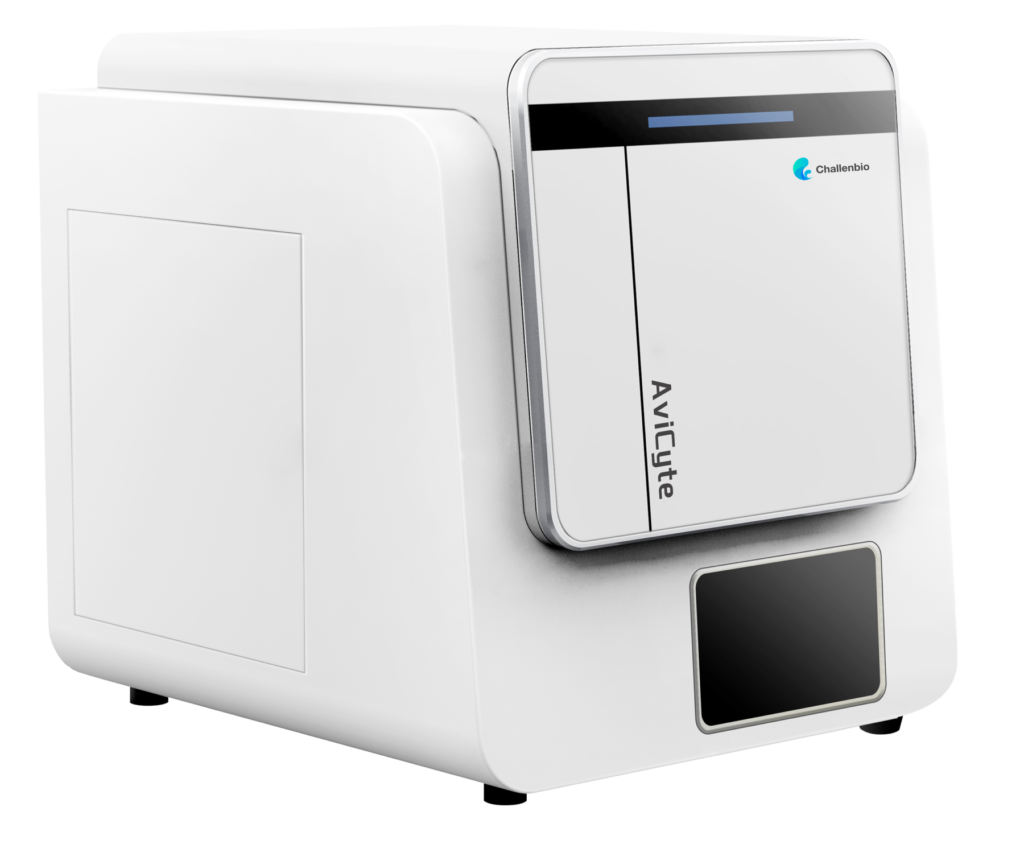
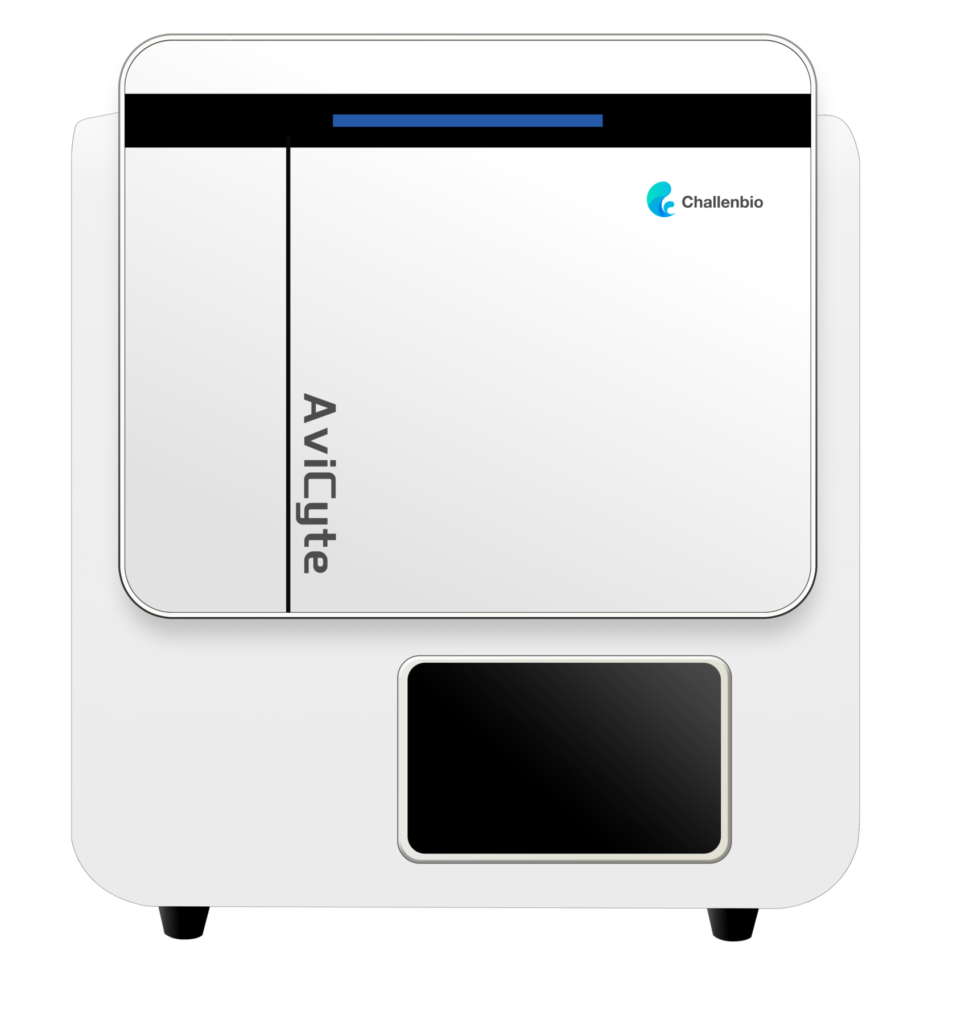

Description
With flexible optical configurations, built-in assay templates and automated sample handling, it streamlines routine analysis and accelerates time to results. One system covers essential applications: immunophenotyping, cytokine analysis, cell cycle, apoptosis, and more.

The AviCyte simplifies routine operation by:
One-touch startup/shutdown without waiting:
During execution, it provides flexible options and delivers accurate results:
Two unique patented sample injection modes are available:
- Quantitative inhalation mode: High-precision plunger pump minimizes clogging and achieves absolute counting without micro-beads.
- Continuous direct into Flowcell mode: Suitable for rare cell detection.
- Compatible with both volumetric and micro-beads methods for absolute counting, with correlation coefficient R²>0.99.
Integrated autosampler, it allows seamless one-click switching between single-tube and high-throughput modes on the software without any waiting time:
- Compatible with various types of adapters: 96-well standard (U-and V-bottom, flat) plates, 40-EP tube racks (1.5ml and 2mL), and 40-Falcon 5ml tube racks.
- Patented sampling needle mixing and stirring mechanism, with adjustable stirring time and force.
- Unique laser-detector dual temperature control technology ensures accurate and reliable experimental data:
- Customized semiconductor lasers and APD monitoring systems are both temperature-controlled by TEC, offering excellent photodetector efficiency. They are resistant to temperature fluctuations, ensuring stable and reliable detection results.
Built-in Templates
The software includes built-in automatic lymphocyte subpopulation analysis, cytokine analysis, and common report templates such as TBNK. The detection report is editable and can be directly output and printed.
Fluorescence Compensation
Visual fluorescence compensation supports both manual and automatic compensation, with options for online and offline compensation.
Dual Quality Control
One-touch automatic QC to monitor the resolution of each fluorescent channel and the stability of median fluorescence intensity(MFI);
